A solo physiotherapist, Leeds
Home exercise programmes patients actually follow
How a solo physiotherapist could turn each post-op knee visit into a SOAP note and a clear home programme the patient keeps to between appointments.
A representative persona, not a real customer — and with no invented results presented as fact. It’s here to show the shape of the work, not to report one.
The challenge
Most of the recovery happens away from the clinic. A patient comes in after a knee replacement, leaves with a printed sheet of exercises, and by the following week half of it is a blur — which exercise, how many, was it the painful one they were meant to push through or ease off?
The honest, exercises-on-a-photocopied-sheet approach left this physio fielding the same calls: “what was I meant to be doing again?” Progress between visits was hard to see, and writing up each session afterwards ate into already-short admin time.
How they use Qumira
After each appointment they jot the visit the way they always would — subjective, objective, assessment, plan — and Qumira shapes it into a structured SOAP note, with range-of-motion and the day’s findings captured in fields they can come back to.
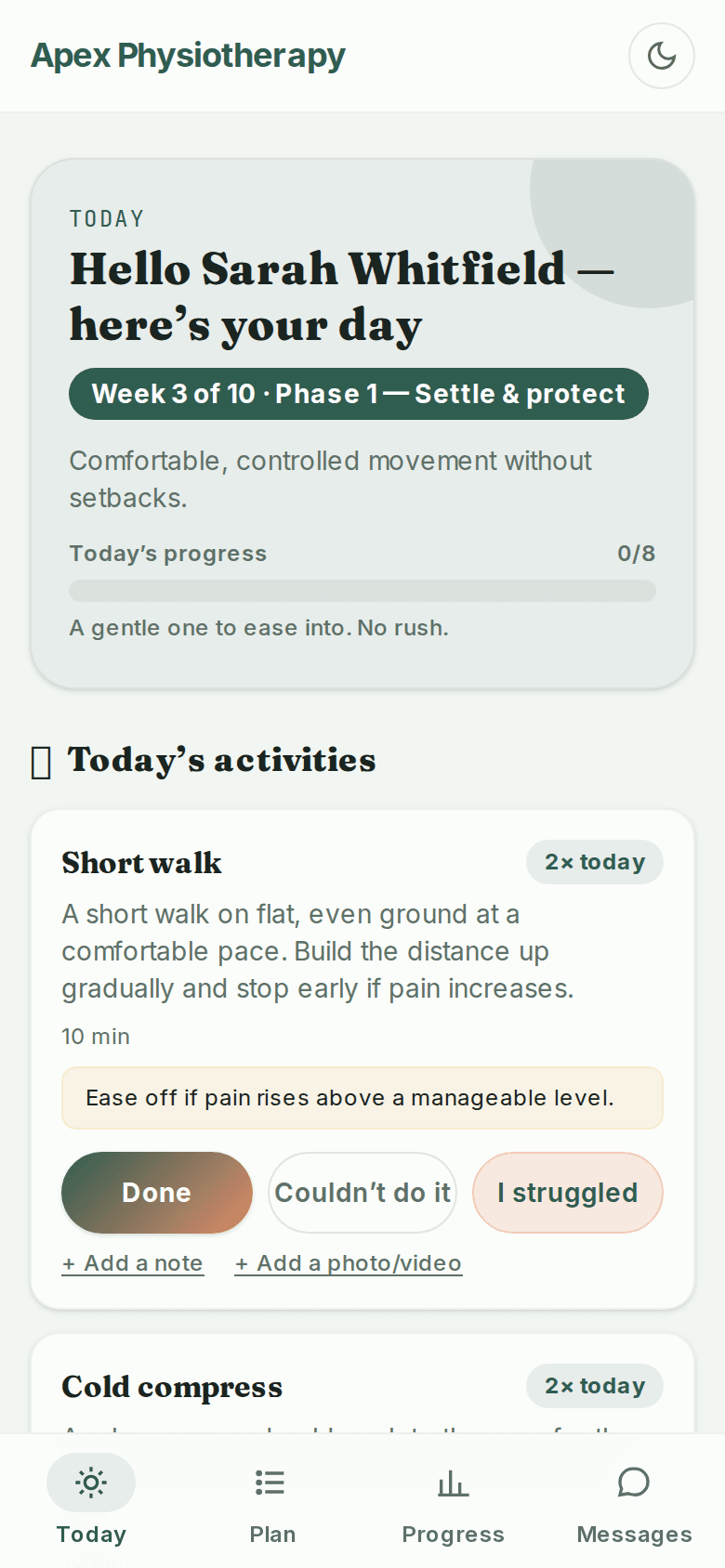
From the same note they build the week’s home exercise programme: each movement with reps, sets, a short cue, and how it should feel. The patient gets it on their phone as a calm, branded plan — not a wall of jargon — so the right exercises are in their pocket, in plain language, the moment they leave.
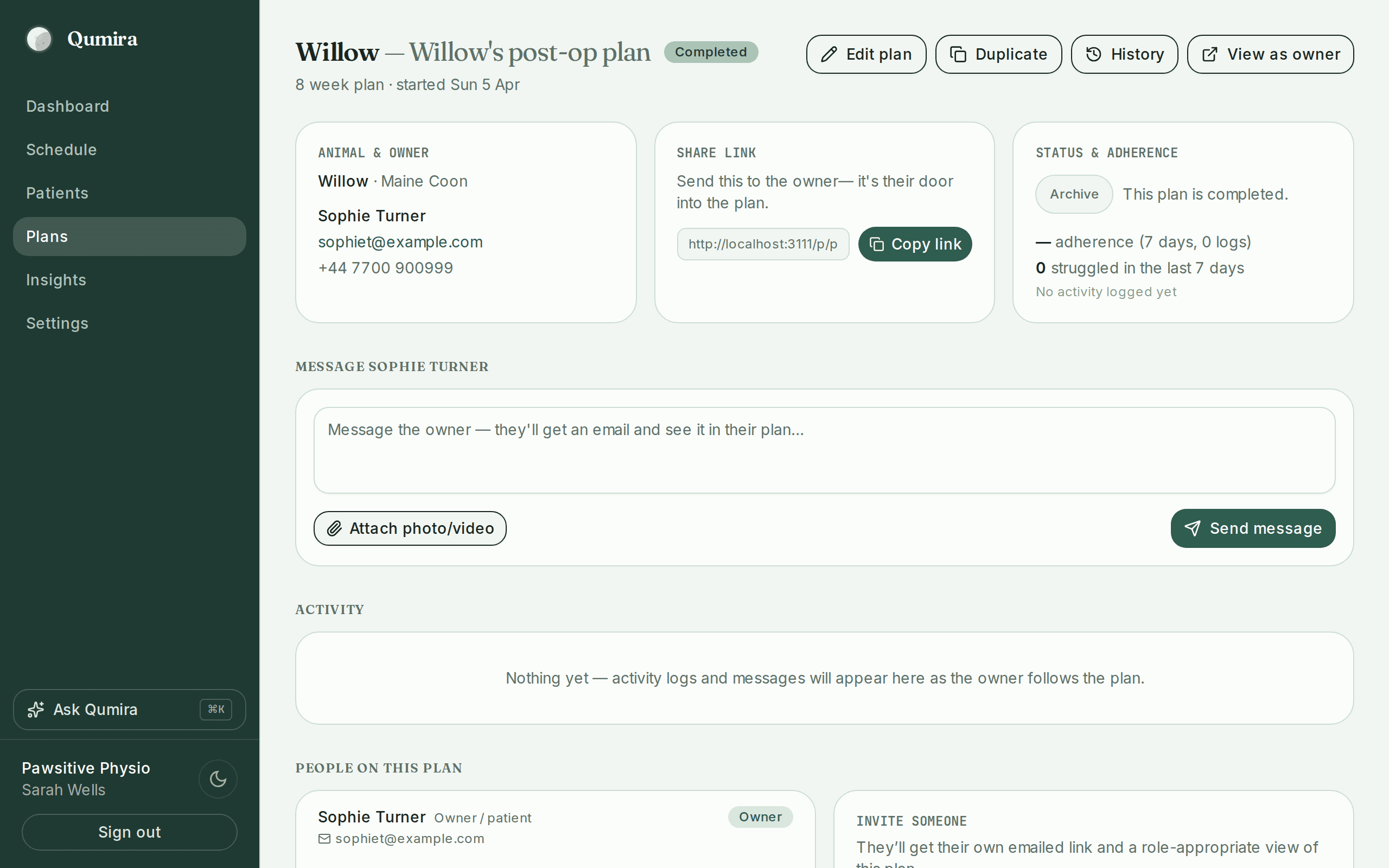
Between visits the patient ticks off what they’ve done and flags anything that hurt. At the next appointment the physio opens the plan monitor and can see, at a glance, what was actually completed and where things stalled — so the session starts from what happened, not from trying to reconstruct it.
The outcome
The picture this points to is a calmer week on both sides of the link. Patients have a plan they can follow without second-guessing it, which tends to mean fewer “what was I meant to do?” messages and a clearer sense of their own progress.
For the physio, the write-up is mostly done by the time the patient has left, ROM is tracked visit-to-visit rather than half-remembered, and each session can pick up exactly where the last one ended. These are qualitative aims, not guarantees — but they’re the kind of day-to-day friction Qumira is built to take off the table.
“By the time they’re out the door, the note’s written and they’ve got the right exercises in their pocket — in plain English. I spend the next session moving them on, not working out what they actually did.”
Build something like this
This is one representative scenario — yours will look like your practice. Tell us what you do and we’ll show you how Qumira fits.